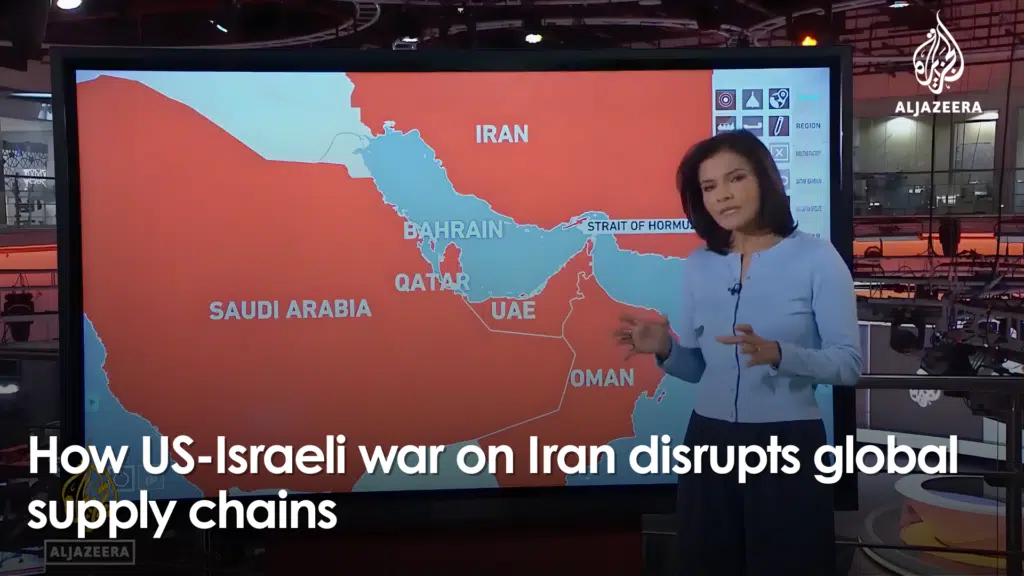
How US-Israeli war on Iran disrupts global supply chains
Geopolitical tensions in the Gulf are highlighting a risk far more serious than rising prices: the disruption of aluminium supply chains. The effective closure of the Strait of Hormuz is not only pushing prices upwards, but is directly affecting the physical flows of raw materials. On the one hand, there is a risk of disruption to primary aluminium exports from GCC countries to international markets, including Europe. On the other, constraints are emerging on alumina imports into the Gulf — a critical raw material needed to sustain production.
This dual dynamic could have much deeper consequences: not only a temporary reduction in exports, but also damage to the production structure of smelters in the GCC. In the event of prolonged shutdowns, restarting operations may take months, if not years, creating the risk of a structural disruption in global supply.
For Europe, already heavily dependent on primary aluminium imports, this represents a double risk: reduced availability of metal from the Gulf and, at the same time, extremely high price levels. In an increasingly unstable global context, this underscores the urgent need to strengthen supply chain resilience, secure access to raw materials and develop a more robust and forward-looking industrial and energy strategy.
Full video by Al Jazeera is available here.